> For the complete documentation index, see [llms.txt](https://help.docupilot.app/llms.txt). Markdown versions of documentation pages are available by appending `.md` to page URLs; this page is available as [Markdown](https://help.docupilot.app/document-template/fillable-pdf.md).
# Fillable PDF
With Docupilot, you can automate a fillable PDF document. Docupilot attempts to use field names and other properties from the underlying PDF field to create the token. You'll need to use a PDF editing software program like Nitro Pro and Adobe, PDFescape to create a fillable PDF.

{% file src="/files/-M6eooG6nbOC3T5LHBXt" %}
Example Fillable PDF
{% endfile %}
**Checkbox**, **Radio** fields in the PDF has an "On" value or an "Export" value. When the value that you are passing matches this "On" value, the checkbox will be checked.

{% hint style="warning" %}
The Export value for a checkbox is limited to 125 characters
{% endhint %}
### Uploading Fillable PDF to Docupilot
Once you have the PDF created, you can upload it to Docupilot and the fields are recognized automatically. If you need to make any changes, make the changes in your PDF editor, then upload the PDF to Docupilot.
### Editing a Fillable PDF
Fillable PDFs templates can be edited and customised using a paid version of Adobe Acrobat or some free tools like PDFEscape, etc.
> *Note that the 3rd party tools mentioned here are merely a suggestion. We strongly advise you to choose the tools after thoroughly reading relevant legal documentation of how these tools use/manage your data.*
### Flatten PDF
By default the fillable fields are removed in the generated PDF. You can preserve the generated PDF as a fillable PDF itself. You can goto the templates preferences section and uncheck the flatten pdf option as shown in the image below.
{% hint style="warning" %}
Save the changes after updating the preferences.
{% endhint %}

### Embed Images/Signature images
You can goto template preferences -> More options -> under insert dynamic images you can enter the width, height, and location of the image in the PDF. You need to pass a image url for the token fields to insert the image in the PDF.


{% hint style="info" %}
The image URL need to be publicly accessible so we can download and insert it in the document.
{% endhint %}
## Editing a PDF Document
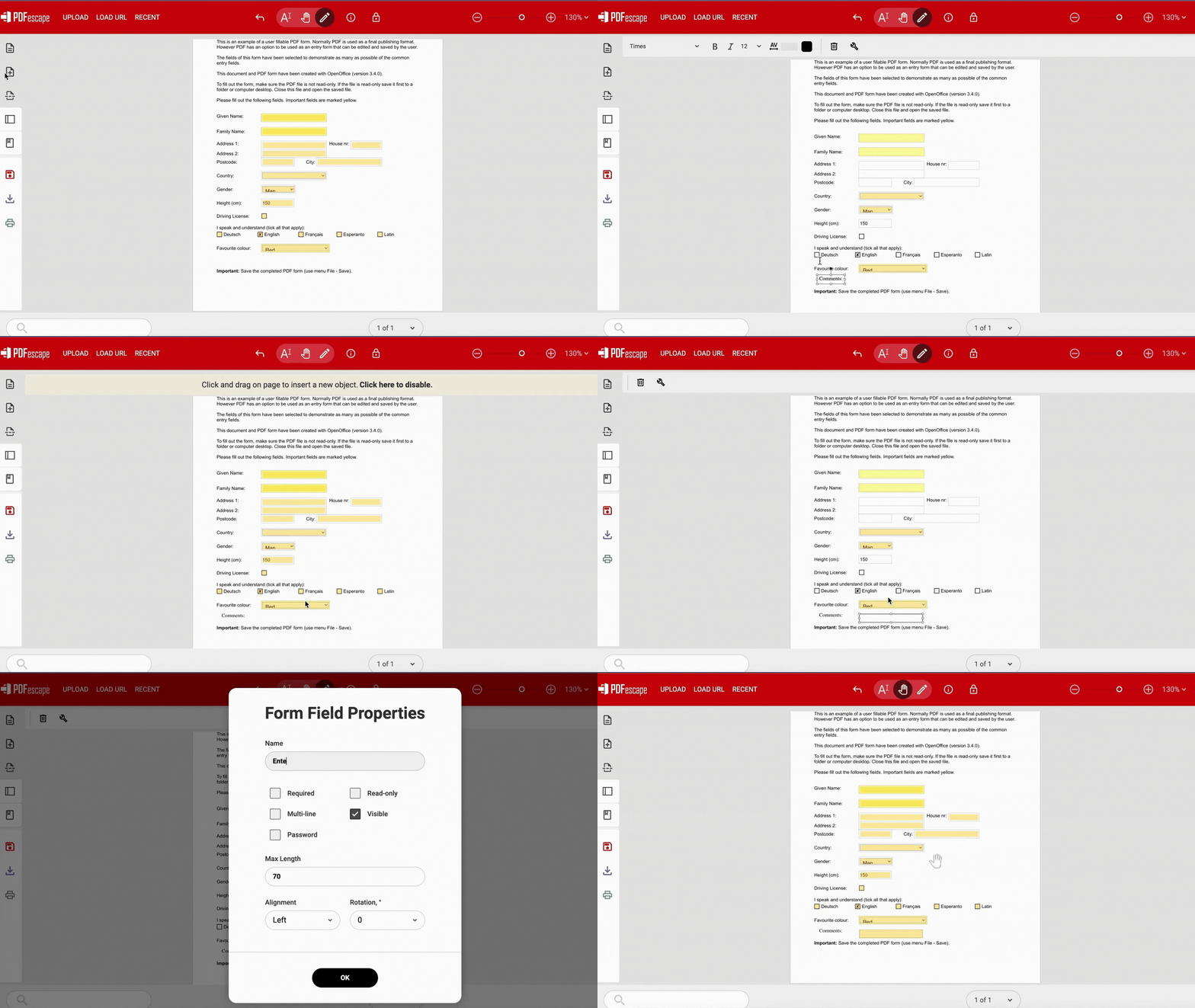
To edit fillable PDF templates, consider using software like Adobe Acrobat. This allows you to modify text, insert signature fields (e.g., `\s1\`), or add new fillable fields. For a no-cost alternative, [PDFEscape](https://www.pdfescape.com/) is a viable option for making changes to PDF templates.
Example: Adding a Text Form Field in a PDF document.
---
# Agent Instructions
This documentation is published with GitBook. GitBook is the documentation platform designed so that both humans and AI agents can read, navigate, and reason over technical content effectively. Learn more at gitbook.com.
## Querying This Documentation
If you need additional information that is not directly available in this page, you can query the documentation by asking a question.
Perform an HTTP GET request on the following URL with the `ask` and `goal` query parameters:
```
GET https://help.docupilot.app/document-template/fillable-pdf.md?ask=&goal=
```
`ask` is the immediate question: it should be specific, self-contained, and written in natural language.
`goal` is what the user is ultimately trying to achieve, the reason they need the answer. Sharing it helps GitBook give you a better, more relevant answer. A goal is most helpful when it describes the outcome the user wants rather than restating the question. For example, with `ask=how do I create an API token`, a goal like `automate deployments from our CI pipeline` lets GitBook tailor the answer to that use case.
The response will contain a direct answer to the question and relevant excerpts and sources from the documentation.
Use this mechanism when the answer is not explicitly present in the current page, you need clarification or additional context, or you want to retrieve related documentation sections.